
Live Music Now has delivered Live Music in Care residencies since 2017, combining interactive musical sessions in care homes with embedded training, mentoring and resources for staff. The project brings the joy of live music to older people, including those with dementia, while supporting staff to use music in daily care.
This residency had a clear and lasting impact at Hill House. Residents became more engaged, energised and communicative, with improved mood lasting beyond each session. Staff gained confidence, wellbeing and practical skills, embedding music into everyday practice.
Setting and Context
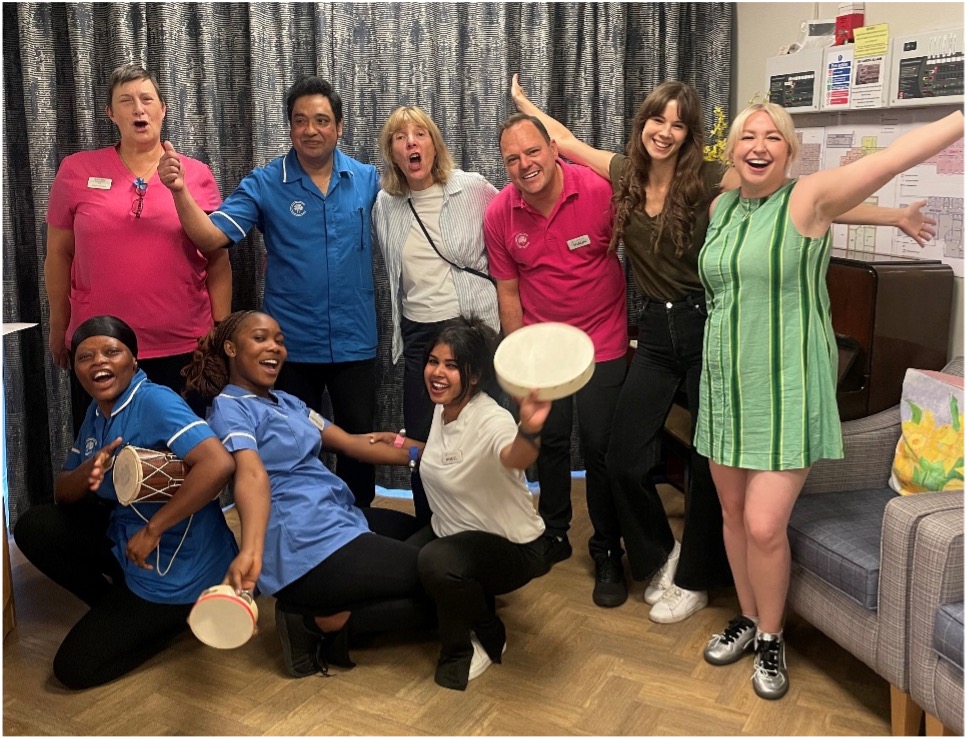
From February to October 2025, Live Music Now partnered with Hill House, a 60‑bed family-run care home in Kenley, south London, funded by Purley Downs Golf Club and The Julia Rausing Trust. The residency supported 25 residents, many living with dementia and age-related conditions, alongside staff from Hill House and its sister home, West Side.
Residents experience varying levels of frailty, cognitive impairment and social isolation. While the home offers activities, staff reported low engagement in traditional formats such as quizzes or seated games. The residency model introduced interactive live music-making as an accessible way to support wellbeing, communication and connection.
Professional musicians Zoë Wren and Ainsley Hamill delivered fortnightly workshops alongside staff training, mentoring and workforce development through the Open Awards Badge of Excellence.
The Project in Practice
The residency centred on 10 interactive workshops lasting 45–60 minutes. Sessions encouraged participation through familiar songs, movement, conducting, rhythm-making, percussion, humming and shared listening. Residents engaged at their own pace — singing, tapping, smiling, conducting or simply being present in the shared musical space.
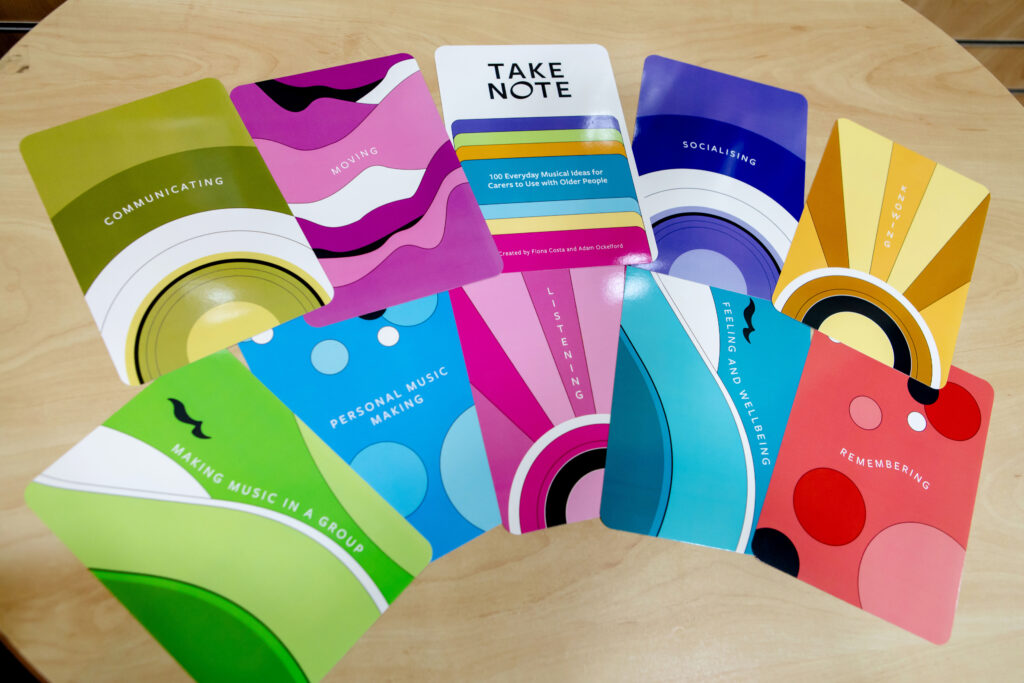
Staff were involved throughout, supporting residents and building confidence to lead musical activities independently. They also received training in using Take Note, a music-based toolkit designed to enhance wellbeing for older people, including those with dementia.
Badge of Excellence – Workforce Development
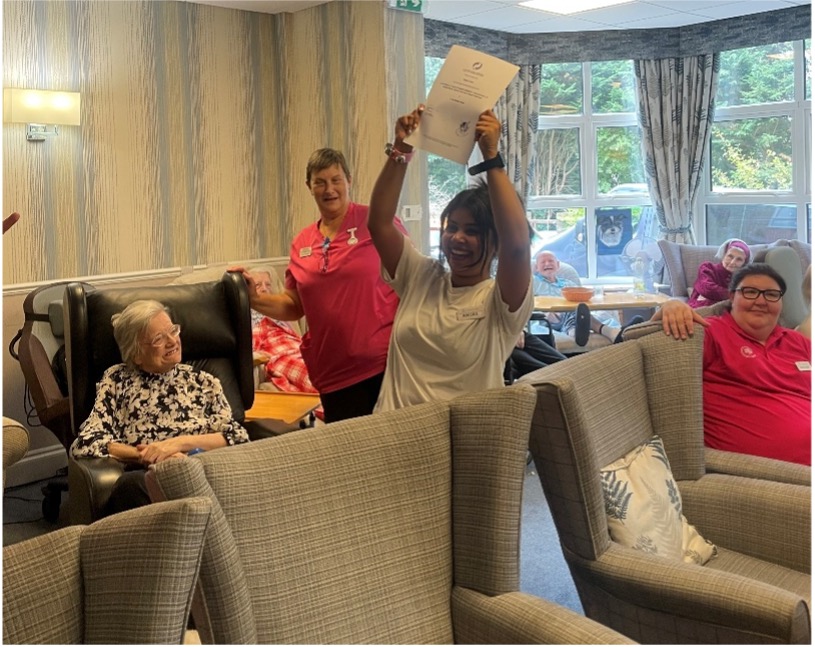
Live Music Now worked with Open Awards to develop the Badge of Excellence in Live Music in Care and Health. It offers meaningful professional development and helps organisations demonstrate investment in their workforce. By the end of the project, staff had strengthened their understanding of music’s therapeutic benefits, developed practical session-leading skills and reflected on how to grow musical activity within the home. Eight staff members completed their Badge of Excellence. We were delighted that eight staff members completed their Badge of Excellence.
Take Note
A new addition to our work has been made possible with funding from the Julia Rausing Trust. This has been the use of Take Note resources; developed by the University of Roehampton and Sounds of Intent with Live Music Now supporting the development phase. This music-based resource has been designed for caregivers to enhance the wellbeing of older people. The resources comprise a website and a pack of flash cards which were provided to the care home for free. Musicians received training on how to use Take Note so that during the project they could support staff to use them.
Impact on staff
Increased confidence and wellbeing
The residency had a notable impact on staff morale and confidence. Shaun, Activities Lead, described how participating in the sessions affected his own wellbeing: “Afterwards I feel very good and on a high, energised.”
Mazhar, Senior Health Care Assistant, added: “If we make them happy, then we are happier as well.”
Initially, some staff felt unsure about joining in with musical activities or using their voices in front of others. Over time, supported by the musicians, staff became more confident and enthusiastic participants. By the third session, staff who had previously stood back were leading songs with actions and encouraging residents to join in.
Changing practice and embedding music
Taking part in the residency changed how staff thought about and used music in their daily work. Shaun reflected: “We can be more creative and use things we never thought we could use — like percussion, clapping, drumming on the table, humming.”
By the end of the residency, music was being used more flexibly — as a way to lift mood, calm anxiety, support reminiscence and encourage interaction.
Staff also experimented with the Take Note cards, adapting them to suit their setting. Shaun described using the cards for a 1950s reminiscence session, creating a game for residents to guess the date and singer of different songs.
Workforce development: Badge of Excellence
Eight members of staff completed the Open Awards Badge of Excellence in Live Music in Care and Health. Shaun described the experience as motivating and unifying:
“Everybody was enthusiastic to get it done. Everyone got it done quickly and they were engaged… Thank you for giving us the opportunity.”
Musician Ainsley Hamill reflected on the transformation she observed:
“At the beginning I wasn’t sure if some of the care staff would complete it, as a few seemed unsure or nervous, but they really stepped up. We worked together as a team to build their confidence, and it feels like an incredible achievement that everyone now has their Badge of Excellence.”
The Badge helped staff develop a deeper understanding of the benefits of music, practical skills to lead sessions, and confidence to embed music within the care setting.
Impact on residents
Increased engagement and participation
Staff observed a clear and consistent difference between residents’ engagement in music sessions compared with other activities. Shaun, explained:
“They’ve got more of an energy level, more of a high. If we do a normal activity, let’s say a quiz, to be honest they’re hardly engaged. Maybe four residents are engaged in a quiz. Whereas with music, the majority are involved. You can definitely see the impact of music.”
Residents who rarely participated in activities responded strongly when music was introduced, particularly familiar songs. Shaun described how some residents who typically declined activities became animated and involved as soon as the music began. One resident, who at the start of a session appeared withdrawn and disengaged, began conducting the musicians and singing along as the workshop progressed.
Mazhar highlighted the sense of comfort music created for individual residents:
“D likes it. Any other activity she doesn’t enjoy much, but whenever it’s singing she likes to sing as well. She is more comfortable — it’s a safe space for her.”
Improved mood lasting beyond sessions
Staff consistently reported that the positive effects of the music sessions extended well beyond the workshops themselves. Shaun noted:
“I would say the rest of the day, until bed.”
Musicians also witnessed noticeable changes over time. One resident who had initially shouted at the musicians to leave later clapped along and smiled during a song, marking a meaningful shift in her response to others.
Family members joined some of the sessions, creating shared moments of joy between residents, relatives and staff. These experiences helped strengthen relationships and allowed families to see their loved ones actively engaged and enjoying themselves.
Legacy and Sustainability
The impact of the project continues beyond the residency period. Staff now run regular music activities independently, including ‘Sing-along with Kate’, held fortnightly. Staff interest in learning instruments has grown, with one member taking up the guitar and others expressing a desire to learn together. The Take Note resources remain with the care home, providing an ongoing tool to support residents’ wellbeing.