
Ward Summaries
Children’s Ward (Ward 17)
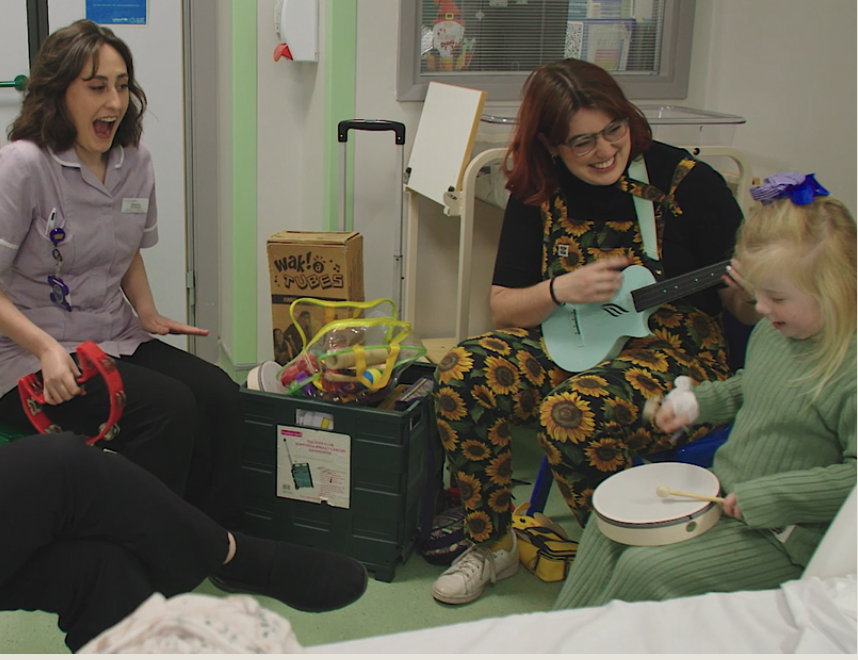
The project worked closely with the Play Team. Musician Eleanor Mills delivered 15 sessions, including group work, one-to-one bedside sessions, and interactive instrument play. Sessions were tailored to different ages, incorporating sensory approaches and creative music-making.
Key findings:
Teamwork: Staff confidence and proactivity increased over time. One noted, “We do a lot of colouring but wouldn’t have thought of adding chime bars and putting those two things together.” Staff valued the musician’s skill in establishing rapport: “It’s a way of getting a talking point with those teenagers, it’s a bit of common ground.”
Improved patient and parent mood: Sessions provided a positive distraction and a highlight of the week. Parents observed changes in children’s engagement: “That was the first time I’ve seen him smile since we’ve been here.”
Increased confidence and self-esteem: Children chose songs and instruments, boosting autonomy and pride. One Play Specialist reflected, “It’s something they can take away as a positive that they got from hospital” and another reported that a patient with an eating disorder became more confident in saying what she wanted to do during the sessions which they felt was a significant step.
Stroke Ward (Ward 6)
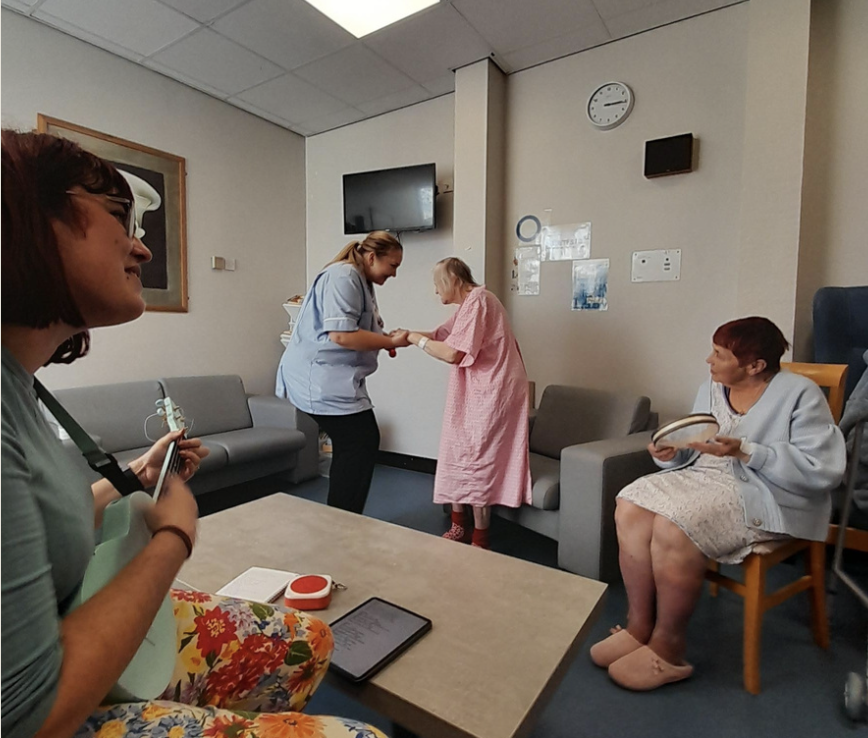
Sessions were integrated into therapy groups run by the Occupational Health team with therapy assistants participating actively alongside musician Esme. 10 sessions encouraged engagement, personal expression, and social connection.
Key findings:
- Engagement and connection: Singing helped to foster a sense of community not just in the therapy group but in the ward generally. A therapist said, “It brings them together with camaraderie, it gives them a sense of wellbeing and it makes them feel as though they have something to look forward to.”
- Improved mood: Music supported emotional expression and uplifted patients. One noted, “We’ve seen patients come in acutely unwell, unresponsive to sound or stimulus of movement but when we’ve brought them into the therapy group, their presentation has changed, their cognition has become more alert, you can see the expression on their face change.”
- Staff development: Therapists valued incorporating music into therapy: “Just as much as the physical rehabilitation such as the walking practise, the upper limb movement, the personal care…this musical stimulus is just as important I feel, and I’ve noticed a difference in patients who have engaged with this through this period.”
Cancer Centre (Chemotherapy Outpatients):
Key findings:
- Welcome and distraction: Patients appreciated a more welcoming environment: “Having the music here has made it so much better than they were expecting it to be.”
- Improved mood: Patients found conversations around music meaningful: “I sat with P, I asked him if he wanted to choose a song, and I showed him my list—he picked Tainted Love …I played this to him and then we had a chat about life, his plans after treatment and my music.”
- Reduced anxiety: Music eased stress during treatment. A patient said, “When you’re having chemo when you actually go in you have nobody and it relaxed me.” Staff echoed this, noting, “They’re not having to think about their treatment, not having to think about where they are—they’re just enjoying some live music.” Patient survey data (43 responses from Chemotherapy patients) showed:
- 93% said it improved the general atmosphere of the hospital
- 89% said it improved their mood
- 92% of anxious patients said it reduced their anxiety
Diabetes & Endocrinology Ward (Ward 14)
Due to high acuity and staffing shortages, only four sessions were delivered before the decision was made to reallocate musician time to the Children’s Ward.
Evaluation Methods
An evaluation framework was created to ensure project aims were measured and data was collected through patient surveys, interviews, reflective journals and BOE documentation. A general survey for the project was developed in line with Live Music Now focus on the impact of programmes on patient mood and feelings of anxiety and loneliness. Two volunteers were recruited through the Hospital Volunteering Service to support some of the evaluation gathering with patients.
Conclusions
All patient cohorts involved reported improved mood, more connection with others, reduced anxiety and a positive distraction from the hospital environment and treatment.
Factors that contributed to the success of the project were:
- Appropriateness of the music and the skillset and experience of the musician
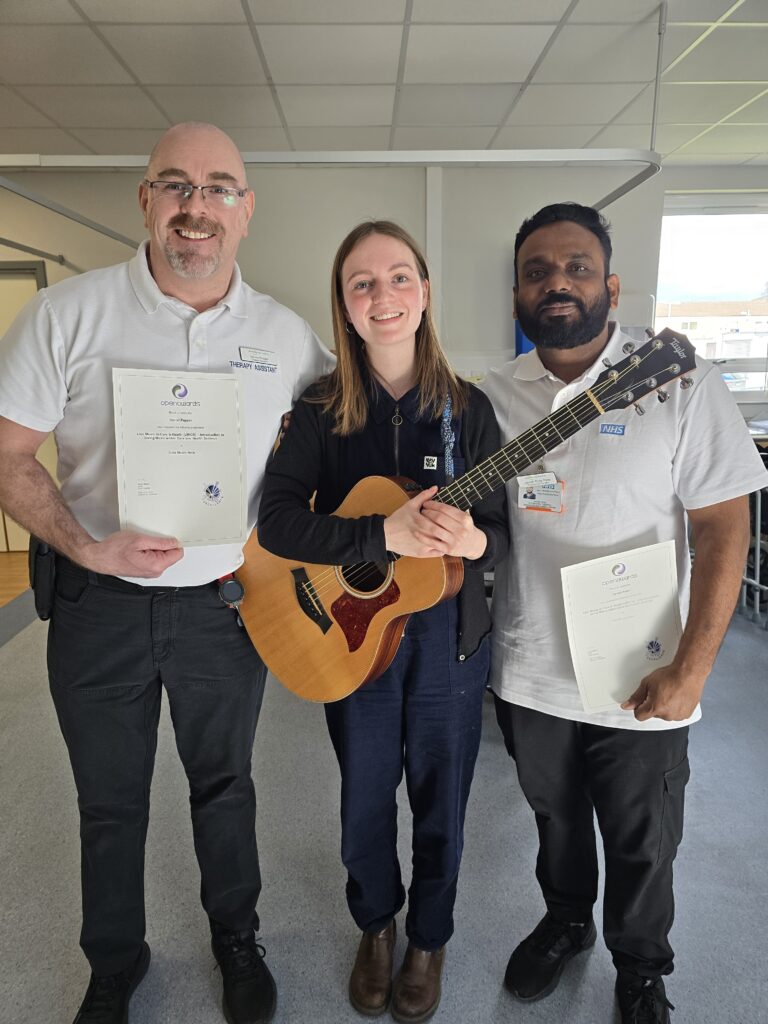
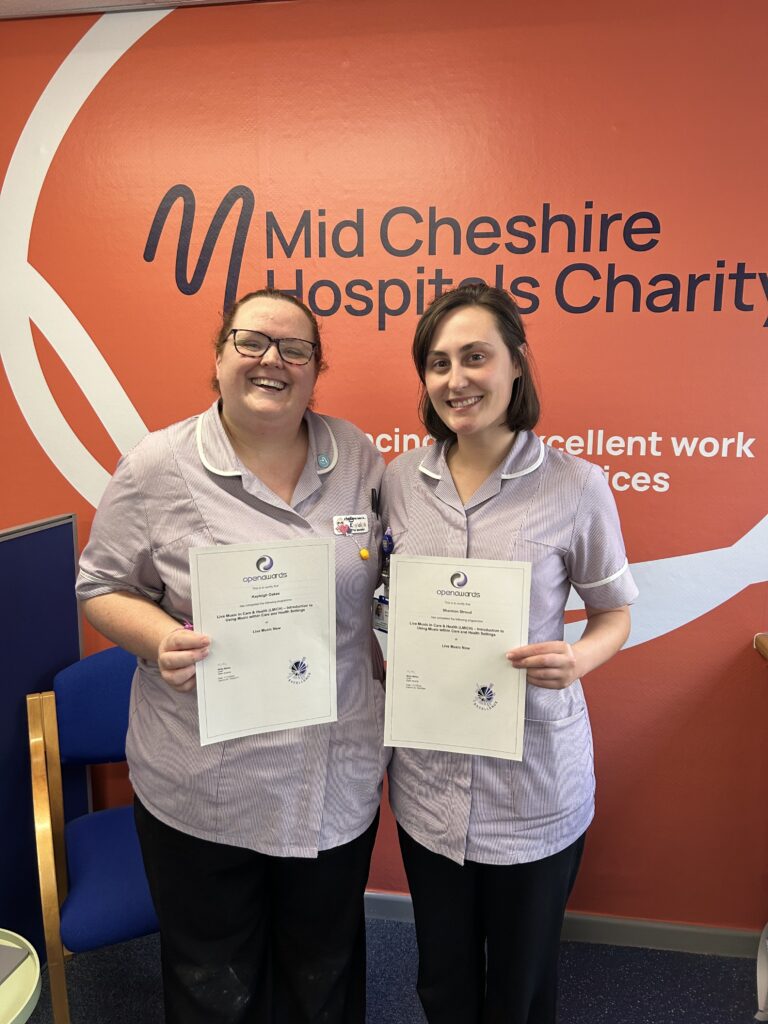
- Participation in the Badge of Excellence Award, which encouraged reflection and more dedicated time from staff to develop and support. The award was also a great motivator for staff who all felt a sense of achievement at the end of the project.
- Having staff involved who had flexibility and some autonomy within their roles.
- Regular, repeat sessions so patients could develop confidence and rapport with the musician.
Challenges and barriers to consider for future projects are:
- More flexibility with the Badge of Excellence could make it more accessible to a wider range of staff.
- The support of senior staff in facilitating regular planning and reflection for staff.
- Ensuring that key staff are given time to input into pre-delivery planning and evaluation design.
- Building ethical considerations about patient choice to participate and informed consent, into the initial training.
Project made possible with funding from: